

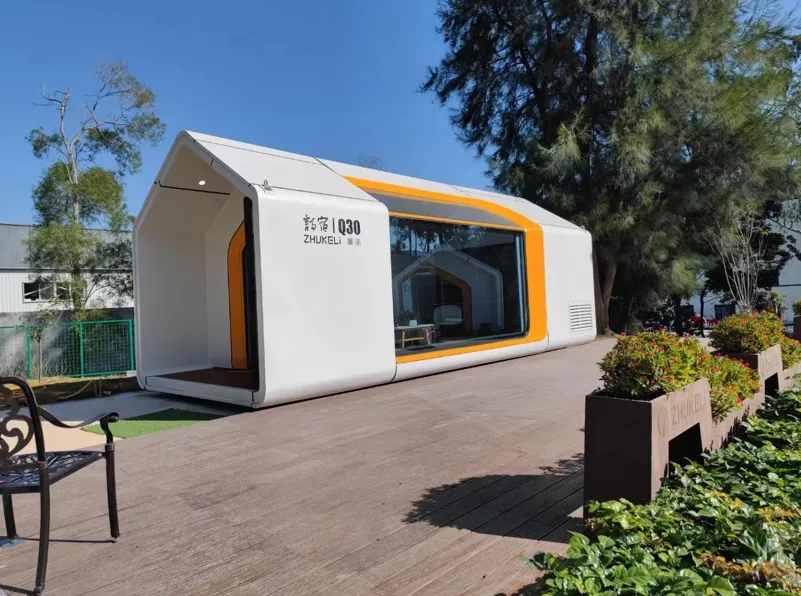
Lately, many friends have asked, “Is a flat-pack container worth investing in?” As a modular space design expert, let’s explore this “space magic box” trending in architecture, camping, and entrepreneurship. This guide covers its definition, uses, benefits, and pitfalls—so even beginners can understand its value.
What Is a Flat-Pack Container?
A flat-pack container isn’t just a modified traditional shipping container. Its core strength is being separable and easy to transport. After production, all parts break down into flat panels. Take a common 1-bedroom, 1-bathroom, 1-living room model:
- Folded size: L2950W2200H2480mm (takes less than 1/5 the space of its unfolded state).
- Unfolded size: L2950W6300H2480mm.
- Interior size: L2690W6140H2240mm (spacious enough for living or business).
- Net weight: 2.5 tons (easy to move and place).
On-site assembly needs only basic tools and a manual—no heavy lifting equipment required.
Why It’s Gaining Popularity
It meets the need for efficient, flexible, and low-cost space solutions. Here are its key advantages:
1. 50%+ Savings on Transport & Installation
Traditional containers waste money on empty return trips. Flat-pack containers, in flat form, let one truck carry 10+ sets. A 2-3 person team can assemble a standard unit in a day with a manual—no need for hoisting or professional builders. This is ideal for budget-conscious entrepreneurs and individuals.
2. Unmatched Flexibility Across Scenarios
- Commercial Use: It can be a “mobile 奶茶店 (milk tea shop)” — deck it out, place it in a busy area, and move it easily during peak seasons. It also works as a construction site office or worker dormitory—more durable and better insulated than prefab board houses.
- Personal Use: Campers turn it into a “stargazing cabin” (some models have water/electricity for AC). Farmers use it for tool storage or seedling greenhouses (better value than brick buildings).
- Modular Design: Standard layouts (like 1 bed, 1 bath, 1 living room) suit short/long-term use. Designers even combine them into small homestays or co-working spaces. Plus, one 40HQ container can hold 4 units—slashing bulk shipping costs.
3. Proven Durability
Don’t doubt its strength because it’s separable. Reputable brands use high-strength steel (wind resistance up to Grade 10). With anti-corrosion treatment, it works near the coast. High-end models have insulation for cold northern winters—just as practical as traditional buildings.
What to Consider Before Buying
- Payment & Delivery: Most use TT (30% deposit, 70% before delivery). Lead time is 10-20 days—plan your timeline and budget.
- Specs Match Your Needs: Check if dimensions (like L2950W6300H2480mm unfolded) fit your use. For a homestay, ensure the 1-bed, 1-bath, 1-living room layout and spatial flow work for guests.
In short, flat-pack containers are a modular-era “space solution”. For businesses (like container homestays) or personal use (like camping sites), they offer great value when used right. With a 2.5-ton weight, 4-unit-per-40HQ efficiency, and clear payment/delivery terms, they’re a reliable choice. Have you seen any cool flat-pack container projects? Share in the comments!